Showing posts with label las vegas. Show all posts

Monday, January 5, 2009

CES 2009: Focus on the Affordable


This year's CES, which takes place from January 8-11 in its usual spot, Las Vegas, NV, will undoubtedly serve as host to fewer visitors, and carry a much more restrained focus, so to speak, than in previous years. The reason is obvious: the state of the economy. But this isn't to say that there won't be plenty to see. On the contrary, we'll just see the focus shift to products, technologies, and features that might not have played such an important role before.

For one, this year's event will probably see more emphasis placed on affordable gadgets, like portable navigation and media players, over big-ticket items. If a company is promoting a big ticket flat panel TV, speaker system, or what not, bet your bottom dollar that his pitch will focus on an aspect of the product that will help to save energy and consequently, money.

But energy savings isn't the only place that manufacturers can hang their affordable hats: things like Internet TVs could negate the need to buy a separate, large display monitor for your computer; while the new slew of Internet radios might encourage people to spend less on digital music and CDs. Then of course there's the age old argument that, when you have a fantastic home theatre system at home, why would you need to head out to the movies (or elsewhere) on a Friday night? Taking that into consideration as well, I wouldn't be surprised to see things like high-tech board games and other home entertainment gadgetry being pitched to passers-by.

More affordable gadgets as a whole will see greater presence at this year's event: everything from rechargeable batteries that help save the environment and dollars to video games and systems; one area that is still doing well despite the economic situation. Other small-ticket items like portable navigation devices, MP3 players, and iPod-related fare will be hot with retailers looking to offer consumers a greater selection of items that won't hurt their pocket books.

Don't take this to mean, however, that makers of the more expensive and sophisticated technology will be twiddling their thumbs on the show floor because retailers think consumers won't be investing for the first part of this year. CES will still serve as a time to learn about the new technologies, find out what's what, and make at least preliminary, if not final, decisions on what to bring in store.

As some other reports have pointed out, CES could also serve the dual purpose of helping business partners avoid additional travel. Many dealers meet with vendors after CES, often times traveling to their offices (or vice versa) to make plans for the year. CES could, in many ways, take the place of this extra travel costs: let's find out everything we need to know at the show now, then make final decisions by phone, e-mail, or video conference later.

Anecdotally, after asking around, I've heard speculation that attendance to this year's CES will be down anywhere from 15 to 40%. When we're looking at Canada specifically, this will be hard to tell. It's safe to assume that most custom A/V dealers won't be attending the show since CEDIA is really their "beat". Major manufacturers and retailers will likely be sending a smaller complement of staff down. But smaller companies may see this as an advantage, sending their usual roster of staff, both on the dealer and and manufacturer/distributor side, in order to ensure that they don't miss a beat.

At this point in the game, all we can do is wait and see. We'll keep you updated through reports straight from the show floor. Stay tuned!

Monday, November 17, 2008

Can Vegas Sustain Another CES?


Trade shows, especially in the technology industry, often gravitate to the grand city of Las Vegas. Why? The location is always upbeat, the space accommodating, and the area fairly central to most. But anyone that's traveled to an event there over the past few years knows that the costs are also exponential, and only getting larger. If you go to Vegas for a show like CES, you're liable to pay upwards of $300/night for a hotel room that would normally run for half that. A good meal is tough to find for a reasonable price (although plenty of fantastic meals are to be had if you're willing to fork over the dough for them!) And drinks? You're lucky to find anything, and I mean anything with even just a drop of alcohol for less than $10. But with the economy in the state that it's currently in, will Vegas be able to keep up its perceived price gouging of trade show-goers?

The next massive show to arrive in Sin City is indeed CES this January. At this year's CEDIA EXPO, which took place in Denver, CO, many were rumbling that CES would be jumping ship to another city once its contract was up. The reason? Pricing was getting ridiculous in that great city known as Lost Wages. Some claimed that this wasn't entirely true: the CEA was just bluffing in an effort to get Vegas to wake up to the incredible loss the city would experience if events companies started moving their business elsewhere. Neither of these rumours have ever been substantiated, but we have seen evidence that Las Vegas definitely needs to, and might already be, waking up to the effects economic uncertainty can have.

Visit the official CES Website (http://www.cesweb.org/), for instance, and you'll see a ton of hotels highlighted in bright yellow, signifying that they're offering reduced rates for show attendees. The most dramatic is the Excalibur, where a room that was $219 has now been reduced to just $141.

Aside from the show, the downturn the city is suffering from is becoming quite apparent. According to the Las Vegas Meetings and Travel Website from the Conventions and Visitors Authority, the number of visitors during the month of September was down 10.1% when compared to September 2007. In August, visitors were down 4.3%. The number of attendees at conferences was down 10% in Sept. and a whopping 22.3% in August; while the number of conferences actually held during those months was down 17.9% and 7.2%, respectively when compared to the prior year. Airline passengers arriving to or leaving from Vegas was also down: 9.9% in August and 13.2% in September. On average, all of the aforementioned figures were down at least 4% throughout the entire year of 2008 when compared to '07.

Meanwhile, even the gamblers are pinching their pennies. A recent Reuters report indicates that Vegas gambling is down for the ninth month in a row, while the take for casinos has dropped US$58 million from one year ago to an astonishing US$1 billion! Company shares on the stock market are also plummeting: Las Vegas Sands Corp. dropped from US$122 to just US$6; MGM Mirage from US$93 to US$11; and Wynn Resorts Ltd. from US$139 to under US$44.

While you won't see relevant companies opting out of attending CES this year altogether, you will see a cut back in the number of employees going down to the show. This means fewer flights, fewer dollars acquired from hotel room bookings, fewer dollars spent gambling, and fewer food and drink sales. Booths at the show will likely remain as big and flashy as they always are, but it's very possible that companies will be scaling back on even booth space as they consider bookings for next year's show.

What does this mean? The city of Las Vegas should really be pro-active in addressing all of these concerns, for both visitors and potential business partners that are looking to hold their conventions, events, and parties there. CES isn't moving to another location just yet, and has never announced that it is looking to do so either. But everything could tumble like a deck of cards if Vegas doesn't start proving itself a worthy, and reasonably-priced, home for convention-holders and goers to spend their money.

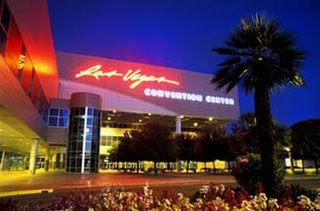
[Photo: Las Vegas News Bureau (LVCVA)].

Bookmark and Share

Wednesday, November 12, 2008

CES: Huge Leaps or Status Quo?

As anyone in the CE industry knows, CES, North America's largest technology trade show, is fast approaching. Returning to Las Vegas this January, the show will feature everything from the latest in consumer electronics, computing, wireless technology and other portable gadgets, digital imaging, and entertainment. You name it: if it's a really influential, really cool, and attention-getting device or technology, it'll be at CES. But just as quickly as all the facets of the technology industry are coming together in harmony, so, too are they branching off in various directions. Because of this, does CES still have the same clout that it used to?

When you think about it, the show, despite its massive magnitude, is surrounded by several other smaller, more focused events. In September, CEDIA EXPO is where the custom A/V companies congregate, while PMA EXPO, held in March, is the show for the photo industry. If you're looking at wireless, whether we're talking handsets, software, apps, or business systems, April's CTIA WIRELESS event is a must-attend. Do you work on the commercial side of things? Then InfoComm is the show for you! So where does this leave CES?

Sure, CES gets the most media attention, and the most visitors, especially internationally. Because of this, many companies hold out for the iconic show to make major announcements. But what if you don't have that much happening in a year? If you're a flat-panel TV maker, for example, you can't hold back the following year's big items until January. Then what will you show at CEDIA? Hey, here's my old stuff. Thanks for coming. See you at CES! (?) Likewise, a camera maker might wait until March to make its big announcements at PMA, but then what do they show at CES? Do you divy up the line-up, showing off some teasers at CES followed by the grand reveal at PMA? Granted, it makes absolutely perfect sense to display the same products at CES that you did at CEDIA or PMA or whatever show floats your boat, because the smaller-scale events certainly don't target the same, massively mainstream audience that CES does. But if your dealers, partners, and specifically targeted media members were already at that other show, is CES worth it for the remaining exposure you're going to get?

The answer to this, of course, depends on a number of factors. How much does the rest of the exposure mean to you? What percentage of your dealers attend CES but don't attend the other targeted show(s), whether that be CEDIA, PMA, or what have you? How important is your message to both targeted and mainstream audiences? And finally, how major is the new product or technology that you're featuring this year? Even if it isn't a "revolutionary" breakthrough as so many companies claim the smallest adjustment to represent, the more exposure your company gets, the better. Exposure is everything. As they say, people might not notice you were there, but they'll certainly notice that you weren't.

With that said, while the 2009 CES might very well be a "status quo" year where we don't see any mind-blowing technologies introduced like we might have in previous years (Blu-ray and HD DVD, flat-panels TVs and 1080p, digital photo frames, and satellite radio, to name a few), it still remains a worthy event to attend if you're in the industry.

**Speaking of those in the industry, I'd love to know your favourite spots in Vegas to take dealers/clients, hang out for a drink or two, or relax during down time. If you send your top recommendation(s) to me via e-mail at cpersaud@marketnews.ca, we'll compile a "top spots" list to publish in the mag and/or online that you can peruse and get some ideas. Because hey, just as much as the show is about learning about products, it's also about wining and dining your dealers, potential dealers, and American/overseas affiliates. Here are a few of my recommendations to get you started:

Japonais in the Mirage Hotel: it serves a fusion of Japanese and French food, and has sushi dishes that are absolutely amazing. The ambience is great, and service is impeccable.

Cirque de Soleil’s LOVE at the Mirage: It’s an exciting, captivating show that’s worth experiencing at least once, especially if you’re a Beatles fan.

The Shadow Bar in Caesar’s Palace: Having stayed in that hotel for the past three years, it’s almost become like my “local bar” a few times every year. It can, in many ways, be considered the new Bugsy’s Bar because it often ends up being a meeting place for Canucks. You’re sure to run into some Canadian industry members there.

And of course who can forget Canada Night at Caesar’s Palace: It’s the event for the Canadian consumer electronics industry. No invitation is required, and all are welcome. We’ll see you there on Friday, January 9, 2009 at 6 p.m.! Click Here for more details.

The deadline to send me your suggestion(s) is November 20, 2008.

Bookmark and Share

Monday, March 31, 2008

CTIA WIRELESS: Viva Las Vegas!


Bookmark and Share

Although it’s my third time in this city this year, Vegas never gets old to me. There’s something about the air that rejuvenates you the second you arrive, even considering the three-hour time difference between Toronto and here. The weather is gorgeous, and the city is full of talk about the CTIA WIRELESS show, which officially begins tomorrow. Tonight is a big “pre” show event where a group of companies will exhibit in a smaller, more intimate venue (which is often times much more appealing than the crowded and loud show floor). I’ll have tons of great information from that show tomorrow. But before the event has even begun, I’ve already seen my first demo!

Nokia cleverly arranged a car service that gave the company the opportunity to show off its new Nokia Maps 2.0 software (now in beta version) by actually navigating us to the hotel. Although the functions the software offers aren’t new in the portable navigation category, per se, it’s amazing to see how quickly the mobile phone category is ramping up its offerings. Powered by Nokia, the service offers the standard address searches and favourites, but adds a new walking mode that does things like avoid one-way streets, and displays little “bread crumbs”, described the rep, as you walk along your route. The mapping software itself is more robust, with over 15 million Points of Interest (POI), and various viewing modes. It’s worth noting that Nokia showed off the software on the U.S. version of its new N95 handset, which is quite a nifty looking device; not to mention that it includes a whopping 8 GB of internal memory! And the screen itself showed off the vibrant colours of the map in all their glory. The device navigated us to our hotel safe and sound. Hopefully we’ll see this phone in Canada some time soon!

So there you have it. Before I even reached the hotel, I was one step closer to seeing what neat gadgets and technologies are in store at the show. Now it’s time to enjoy 20-degree weather!

Tuesday, January 29, 2008

Price Gouging is Never Right


A colleague and I were chatting the other day about price gouging. Particularly, the way things have gotten so expensive in Las Vegas during the annual Consumer Electronics Show. You no doubt pay more for a flight to Sin City (or any other destination, for that matter) during the days of such a big show then you would any other time of the year. Why? Because airlines know that people from around the world will be traveling there in the thousands. Hotel stays also creep up in price: you might end up paying upwards of $300 for a room that would cost half that any other night. (On New Year's Eve, for example, even the most basic hotel room in Vegas will run you five-hundred smackers!) And do we really need to pay US$10 for a watered-down, half-glass of vodka and cranberry at a cheesy hotel bar?

Of course it all comes down to the basic principles of supply and demand. The more coveted a product or service is by the masses, the higher the price of said product might rise. I've seen nasty examples of this on several, isolated occasions. Anyone who lives in Toronto and tried to buy a bottle of cold water during the sweltering hot summer blackout a few years ago knows exactly what I mean ($5 for a 250 ml bottle, anyone?)

This got me to thinking: is price gouging rampant everywhere? Rather, more specifically, is it rampant within the consumer electronics industry?

In the CE industry, it seems that the situation is exactly the opposite, especially when it comes to big-ticket items. It's no secret that companies like Toshiba and Sony took a hit in order to sell products like first-generation HD DVD players and Playstation 3 at the prices they did. And we all know what severe price erosion is doing to the flat-panel TV industry.

But when it comes to many smaller-ticket items, the gap between cost and sale price is exponentially wider. However, this isn't exactly price gouging: manufacturers and retailers need to make a profit somehow, right? And just because a product might cost X to manufacturer, we all know that plenty of people involved in between the manufacturing process, and the point the product arrives in your hands, need to get paid somehow.

Of course every Tom, Dick, and Harry will have felt, at one time or another, that he's paid what he thinks is "too much" for something. But there's a big difference between perception of price, and actual price "gouging" of the customer.

Needless to say, before you buy into anything, whether it's a product, vacation package, or service, do your research. If you're planning a vacation, investigate times, other than the obvious seasonal differences, when prices usually rise. For example, heading to any city when there's a big trade show or festival won't be your cheapest bet! And always make comparisons before forking over your dough.

As for the water story, it was only select gas stations that were gouging customers who strolled in with sweat dripping off their foreheads and dry mouths, dying for a drop of cold aqua. But charging $5 in a situation like that is just wrong, no matter how you slice it.

[Photo: www.freedigitalphotos.net]

Sunday, January 6, 2008

2008 CES: Simply Beautiful


I'm not referring to CES itself when I say "simply beautiful", although Las Vegas is certainly a very bright and lively city. Rather, simplicity and beauty are underlying themes at the show, which is set to officially commence on Monday, January 7.

Today, Sunday, January 6, was deemed "press day" where major manufacturers gathered journalists of all kinds (including the new "blogger" designation, of which I noticed many) to learn about what's coming down the pike in 2008. The day is stressful, it's hot, you stand in line after line with fellow journalists bumping into you, stepping on your feet, and pushing you to get the best seats in the house or the free swag. But it's all worth it to see what's hot for the new year.

Before I get into all the goodies, I want to first address what's been the talk of the streets, so to speak, here at the show. Warner's decision to abandon the HD DVD high-definition DVD format and support Blu-ray exclusively has really put a thorn in HD DVD's side, and many are predicting that there will be an end to the format war earlier than we had anticipated. I must admit that the loss of Warner is quite a hefty blow, but we'll see how things pan out throughout the course of the show and the weeks that follow.

Now, back to press day. The design/lifestyle theme isn't really a "new" one: consumer electronics products have been looking sleek and sexy for ages. But we're seeing a revitalized emphasis in the flat-panel arena, specifically. I already discussed the expected trending toward thin-bezel designs, and new product announcements proved this to be true. Toshiba announced a new 52" model in its Super Narrow Bezel LCD line that's just 0.9" thin, and can fit in the spot typically occupied by a 46" model! Panasonic is taking the "thin" theme to Blu-ray with what it deems the "world's thinnest" Blu-ray disc drive; while Sharp displayed a 65" prototype LCD that is less than 1" thin and weighs 88 lbs. (and with a contrast of 100,000:1 to boot!)

But there are also other, aesthetically-pleasing enhancements being made in the category. Samsung is adding a "touch of colour" to its displays via a seamless cabinet that eliminates screws on the front, and adds, well, a touch of colour to the frame. Meanwhile, Sony is taking aesthetics to a whole new level with the launch of an 11" OLED TV that's actually available for purchase today! They say good things come in small packages, and they're right. Sure, it's a far stretch from a 60" TV in your home theatre, and lifespan issues persist. But with images so superbly gorgeous, you can't help but stare in awe.

Of course although a nice-looking TV is great, it's what's inside that counts, right? We all know about 1080p, 120 Hz refresh rate, and fast response times that are being incorporated into the latest and greatest flat-panels. But every manufacturer also demonstrated a specific focus on inter-connectivity, either involving the Web itself, and/or among various devices. Take Sharp's new AQUOS Net feature, for example, which provides access via an Ethernet port on the TV to a portal with neat items like sports, weather reports, traffic updates, and even entertainment through partnerships with companies like NBC. Just press a button on the remote, and up comes an interactive menu. J.W. Park, President of Samsung Electronics' Digital Media Group demonstrated a new feature that would allow a video captured on its new camcorder to be wirelessly streamed to a TV, along with its new Series 7 LCDs that would include a built-in Ethernet port and a side-mounted USB slot. Panasonic is focusing heavily on the flash memory card format, incorporating one in many new products scheduled for introduction, ranging from new high-def camcorders, to plasma and LCDs, GPS devices, and even an integrated home theatre system (which also includes a Blu-ray player and iPod dock). What's more, the company (which brands its own SD memory cards) will be launching a 32 GB (yes, you read that correctly!) later this month. Although a price point wasn't announced, we can expect it to be somewhat substantial.

Philips' most promising "integration" device is its BTM-630, which can play back CDs, has an iPod dock, SD card slot, USB port, and Bluetooth technology for connecting with a Bluetooth-enabled mobile phone. It can also serve as a speakerphone for your phone, and even shows the caller information on its screen. When a call comes through, it will automatically pause music, then resume once it's been terminated.

Noteworthy is also Samsung's announcement of its first prototype products using A-VSB mobile TV, an open industry standard for broadcast TV. "It transforms the digital broadcast signal to be able to reach mobile devices,"explained John Godfrey. "Using the over-the-air spectrum, it can deliver things like news, weather, and sports. It turns local TV into mobile platforms."
Snagging the award for the most unusual integrated, connected device of the day, however, is Sony. The Rolly is an egg-shaped device that can play back music from its 2 GB of flash memory or streamed from a Walkman or other MP3 player, a PC, or the new PSP. What's odd about Rolly is that it also dances to that music, rolling and gyrating on the surface with which it sits. "We've created a new way to listen and enjoy music," explained the company's Senior V.P. Rick Clancy. Indeed they have.

That brings us to another theme: simplicity, which was explicitly expressed through taglines like Philips' "Sense and Simplicity" and Samsung's "Life made simple". The focus here is, well, simple. Create products that are easy to use. Sharp takes this philosophy one step further via an Advantage Live tech-support service that would allow the rep (with the customer's permission, of course) access his TV remotely to troubleshoot problems, check settings, etc.

Finally, the last stand-out theme at this show was, by far, environmental initiatives. Arguably the most significant announcement involves the formation of the Electronic Manufacturer's Recycling Management Company, LLC or "MRM", which consists of a partnership among Toshiba, Panasonic, and Sharp. The three companies have joined forces to manage the collection and recycling of electronics within the U.S. The organization has already made arrangements with Hitachi, JVC, Mitsubishi, Philips, Pioneer, Sanyo, and Olevia. Kudos to these guys for taking initiative on helping make the world greener!

So much was announced and discussed today that it would be impossible for me to cover it all here. However, judging from my observations, we can look forward to a lot of simple and beautiful products, enhanced connectivity among all product categories, and an increased focus on helping the environment.

Stay tuned for more information throughout the show.

[Photo: Sony's OLED is just 11" in size, but it packs a lot of punch in picture quality.]

Tuesday, December 18, 2007

2008 International CES Fast Approaching; E-Mail Pitches Arrive in Droves

The 2008 International CES is fast approaching, and anyone in the consumer electronics industry knows that it's a must-attend event, serving as the launchpad for some of the biggest technologies of the year.

Occupying an impressive 1.8 million square feet of exhibit space in Las Vegas, NV, it's no wonder that manufacturers have a difficult time rounding up members of the media and potential retailers to come see their wares. Weeding through my e-mail inbox over the past few weeks, I've noticed some interesting ways that companies and PR reps go about trying to get our attention, and thought I'd share some of them with you.

Most will get straight to the point with a subject line that reads: "meeting request at CES" or "CES briefing" or "can we set up an appointment?". Clear, concise, makes sense. Sometimes I'll get an e-mail that says "You're Invited": now who wouldn't open an e-mail that was clearly extending an invitation? Upon opening, it simply says you're invited to "come see our booth." OK, so it's not really some sort of cool, exclusive invite. But it did pique my interest (and likely the interest of other recipients), so congrats to them.

Others, however, use more creative methods to get a reader's attention. My favourite e-mail of the lot carried the subject line: "Attack of the CES PR People, Run For Your Life". The body of the e-mail simply went on to discuss the major announcements and booth locations of each of the PR firm's clients. But hey, at least they got my attention, right? Another one succinctly stated "CES Invitation: 7 Companies, 1 E-mail". In the matter of a subject line, this sender was able to convince me that there was a justifiable reason for looking at his message: I would get information on not only one company, but seven companies for the price of one! Kudos to these guys for thinking outside of the box.

I don't sympathize with exhibitors at this time of year. It can't be easy to try to convince people to come to your booth out of a choice of 2,699 others. To be honest, I really don't know that there is a tried and true method to get someone's attention with an e-mail pitch; especially when they're being flooded with hundreds of e-mail, phone call, and even snail mail pitches. My best advice to anyone attending, either in the media, investor, retail community, or otherwise, is 1)divide and conquer. You can cover more ground by splitting your resources among key areas. 2) take note of a few "must-see" booths based on what you know is coming down the pike and pitches you received ahead of time; 3) make time to walk the floor freely so you can search for some hidden gems; and finally, 4) wear comfortable shoes!

I look forward to checking out the latest and greatest in technology at next year's event. And for those in the consumer electronics industry, don't forget to attend Canada Night 2008 in the Roman Ballroom in Caesar's Palace on Tuesday, January 8 starting at 6 p.m. We hope to see you there!