Showing posts with label economic downturn. Show all posts

Monday, January 5, 2009

CES 2009: Focus on the Affordable


This year's CES, which takes place from January 8-11 in its usual spot, Las Vegas, NV, will undoubtedly serve as host to fewer visitors, and carry a much more restrained focus, so to speak, than in previous years. The reason is obvious: the state of the economy. But this isn't to say that there won't be plenty to see. On the contrary, we'll just see the focus shift to products, technologies, and features that might not have played such an important role before.

For one, this year's event will probably see more emphasis placed on affordable gadgets, like portable navigation and media players, over big-ticket items. If a company is promoting a big ticket flat panel TV, speaker system, or what not, bet your bottom dollar that his pitch will focus on an aspect of the product that will help to save energy and consequently, money.

But energy savings isn't the only place that manufacturers can hang their affordable hats: things like Internet TVs could negate the need to buy a separate, large display monitor for your computer; while the new slew of Internet radios might encourage people to spend less on digital music and CDs. Then of course there's the age old argument that, when you have a fantastic home theatre system at home, why would you need to head out to the movies (or elsewhere) on a Friday night? Taking that into consideration as well, I wouldn't be surprised to see things like high-tech board games and other home entertainment gadgetry being pitched to passers-by.

More affordable gadgets as a whole will see greater presence at this year's event: everything from rechargeable batteries that help save the environment and dollars to video games and systems; one area that is still doing well despite the economic situation. Other small-ticket items like portable navigation devices, MP3 players, and iPod-related fare will be hot with retailers looking to offer consumers a greater selection of items that won't hurt their pocket books.

Don't take this to mean, however, that makers of the more expensive and sophisticated technology will be twiddling their thumbs on the show floor because retailers think consumers won't be investing for the first part of this year. CES will still serve as a time to learn about the new technologies, find out what's what, and make at least preliminary, if not final, decisions on what to bring in store.

As some other reports have pointed out, CES could also serve the dual purpose of helping business partners avoid additional travel. Many dealers meet with vendors after CES, often times traveling to their offices (or vice versa) to make plans for the year. CES could, in many ways, take the place of this extra travel costs: let's find out everything we need to know at the show now, then make final decisions by phone, e-mail, or video conference later.

Anecdotally, after asking around, I've heard speculation that attendance to this year's CES will be down anywhere from 15 to 40%. When we're looking at Canada specifically, this will be hard to tell. It's safe to assume that most custom A/V dealers won't be attending the show since CEDIA is really their "beat". Major manufacturers and retailers will likely be sending a smaller complement of staff down. But smaller companies may see this as an advantage, sending their usual roster of staff, both on the dealer and and manufacturer/distributor side, in order to ensure that they don't miss a beat.

At this point in the game, all we can do is wait and see. We'll keep you updated through reports straight from the show floor. Stay tuned!

Friday, January 2, 2009

Happy New Year! What Lies Ahead?

Another year, another 365 days. What do we have to look forward to in the consumer electronics industry in 2009? We'll find out much of this at the 2009 International CES, which commences next week in Las Vegas. But there is still plenty that we can safely anticipate.

When it comes to flat-panel TV technology, this could be the year for OLED. Sure, Sony has already been selling its portable (and stunning!) model for more than a year; but might we see larger-format displays utilizing the technology in homes this year?

In the cellular arena, new carriers will commence operations by around Q3/Q4. What will this mean for existing carrier business? What's more, can new entrants even sustain themselves through this troubling economy? After all, building an entire cellular network is a costly venture! Google's Android format will also hit the phones market in full force by the end of this year, leaving much to the imagination on the apps and software side.

Internet radios are also poised to make waves. It's an interesting paradox: while many other devices encourage us to buy digital music online then stream it to our home audio systems, these radios base their differentiating factor on, in part, free, Internet radio content. Could they result in a drop in the sale of digital music? Probably not, since people still like the play their own collections. But these radios do point toward a larger trend in the industry: the connection of the PC to the overall home theatre system.

On that front, many people are excited to see what the PC companies are up to this year. What's up Microsoft's sleeves? Intel? And with Steve Jobs absent from this year's Macworld (which will be the last Apple participates in), will 2009 be a quiet year from the Mac, iPod, and iPhone maker?

We can't, of course, ignore the state of the economy, which will inevitably lead to tough times ahead. But this doesn't mean technology development becomes stagnant, nor that people lock themselves up at home never to visit a retail store again until times get better. Shopping through the holidays, and especially on Boxing Day, proved that Canadians still have a relatively positive outlook that we'll get through the financial crisis.

Still, 2009 is poised to be an exciting year for this industry, as always. Stay tuned next week, where we'll be reporting to you from CES!

Wednesday, December 10, 2008

What Will They Think of Next?: Deal-Stalking Site


With people searching frantically for deals before they fork over dough to shop, it comes as no surprise that some are attempting to capitalize on the trend. A new Website called http://www.jungleninja.com/ "stalks" the Amazon.ca Website for deals 24/7, then posts them, with the best ones ranked at the top. The site, set up by a company in Winnipeg, MB, collects info on any Amazon product that's reduced by 20% or less.

"Shopping on Amazon is really like a cyber jungle with huge discounts hidden all over the site," explains Web developer Evan Falk. "With the economic downtown, my colleagues and I created this free alert so consumers, including ourselves, could find the best bargains fast."

These guys could certainly be on to something. The site is accessible for free, does not contain any spam or ads, and is not affiliated with Amazon.ca in any way. But should it take off as a "Google for deals" of sorts, these guys might be in for a treat.

Bookmark and Share

Monday, December 8, 2008

Discount Retailers Attempt to Take a Big Bite Out of CE Sales


Discount retailers are arguably profiting more, in some sense, from the downturn in the economy as shoppers flock to those stores known to always offer great "deals". So it comes as no surprise that many discount shops are attempting, more so than ever, to take a big bite out of the consumer electronics market this holiday season.

This weekend, I was surprised at the number of Wal-Mart commercials that aired (during my favourite primetime programs!) centred around flat-panel TVs, home theatre, and even Blu-ray. I'm used to seeing plenty of TV marketing dollars from the mammoth retailer, but of all product segments, I wouldn't peg Wal-Mart to be spending so much to plug things like Blu-ray and flat-panels. Kid's toys, home decor items, clothing, DVDs and CDs, yes. But big-ticket CE items? I'm genuinely surprised that so much of the marketing budget went toward this category. The move is a clear indication of one of two things: Wal-Mart is making its mark known as a CE retailer; and/or the retailer is responding to the prospect that home theatre is going to take over as the main activity of choice during these sad, economic times. And of course it goes without saying that one should

Aside from that, pricing is also mind-boggling. Right now, a name-brand 42" 1080p LCD is $950, and an up-converting DVD player is $50. (Interestingly, no Blu-ray players are featured on the Wal-Mart Canada Website, although Blu-ray discs are in abundance). At Costco, a 42" plasma is $860, and a Blu-ray player is $270. At retailers like Tiger Direct, pricing is relatively the same. A colleague told me this morning of a friend who just bought a 46" TV (name brand) for $800 over the weekend! If you can spare the cash and are in the market, now is certainly the time to buy a new TV!

But from a retailer perspective, what happens when these pricing wars continue? The same thing that has been happening for the entire year, even before the recession came into play: other retailers are forced to lower their prices; if not to be in line with discount stores, at least to be close. Products are sold off at almost no margin just so smaller companies can sustain themselves and make it through the storm. And more focus is placed on "added value" services, like free delivery, after-sales service, installation, and product expertise (certainly not a bad thing).

Still, it's an incredible observation overall knowing that just a few years ago, a plasma or LCD could not be had for less than a few grand. To put this in perspective, I searched for some old news stories on our sister Website, http://www.marketnews.ca/, and cam across this 2002 announcement from LG Electronics about the company's brand new plasma displays: the cheapest was $8,500, and the most expensive 60" model was a whopping $26,000: the price of a new car! My, how things have changed...

[Photo: Screen shot at http://www.walmart.ca/]

Bookmark and Share

Monday, December 1, 2008

Black Friday Looked Promising

As online shoppers are clicking away at Cyber Monday, we're in good spirits since Black Friday actually turned out better than expected. A reported 172 million shoppers visited stores this weekend, up 25 million from last year! Even more impressive is that this number is significantly more than the 128 million people that the National Retail Federation (NRF) had originally anticipated would hit stores. So what made people come out with shopping guns-a-blazin' despite the current economy?

As they say, people can't resist a good bargain. And when times are tough, those who might not have bothered seeking out discounts before (the same people that often refuse to wait in line for anything) might just roll up their sleeves and get out with the rest of the deal-seekers. If you've been wanting to buy a new DVD player, winter wardrobe, or toys for the kids, this weekend was definitely the time to do it. In that respect, people probably felt they were better off shopping now and paying things back slowly than waiting until later and paying full price for the same thing.

Still, I surveyed a few people in the U.S. about whether or not they were going to head out to shop, and the responses varied greatly. One person told me that he couldn't bring himself to join the wolves, so to speak.

"I'm not desperate enough to line up at in a tent for a bargain," he said, noting, however, that there were tons of people camped out at his local Best Buy in tents from Thanksgiving night!

Another friend who had originally planned to go Black Friday shopping said she decided to "do her shopping from the web...like everyone else I know."

Meanwhile, a third person shopping in the heart of Manhatten, NYC, exclaimed quite frankly: "Recession? What recession???" It's safe to assume that the streets and stores were packed down there.

Granted, these are only a few personal accounts, but it appears that the situation, not surprisingly, varies from store to store, and city to city. The good news is that, overall, more people shopped, and spent more than they even did last year during this critical weekend. As for future outlook, of course we can't expect these numbers to keep up. The NRF is, however, sticking with its original prediction of a modest 2.2% increase in holiday sales for '08.

As for Canada, I haven't seen any definitive numbers. But a short visit to the Toronto Eaton Centre this weekend had me in shock: I have never seen that weekend destination mall so barren on a late November-early December weekend, and on a Sunday, to boot. Visiting Sherway Gardens shopper centre today for lunch, I was equally disappointed when I noticed that a fast food joint that had only been open for less than a month had already closed its doors. We're certainly up for some tough times ahead. Hopefully they won't last too far into '09.

Stay tuned for final numbers, including Cyber Monday online sales figures, once they become available.

Bookmark and Share

Friday, November 28, 2008

Black Friday Update


A correspondent in Chicago reports to us that Black Friday line-ups in the downtown area are relatively thin. Photos above from the Northbrook Mall, taken shortly after opening at 8 a.m., show a moderate crowd in the Apple Store, but nothing to write home about. This is what an Apple Store in Toronto looks like on a normal day!

As for the "deals", we're told that, quote, "the marketing of the sale is better than the sale itself." Keep in mind that this might not hold true for every retailer in every U.S. city. But in this particular case, Black Friday "crowds" are a bit disappointing.

We're getting mixed messages from other sources: some stores appear flooded with shoppers trampling over one another...literally. In one Wal-Mart store in NYC, an unfortunate employee reportedly died due to the pushy crowds! (Though Wal-Mart only confirms that a "medical emergency" caused the retailer to close that store's doors). Some are claiming that it is in fact the bad economy that has forced them to come out and weather the crowds today: getting a "deal" might not have been so necessary before; but now, shoppers are willing to wait in long line-ups just to save a few bucks.

But other reports claim that retailers are cautious about how things will inevitably turn out. Even in shops with big crowds, people tend to be looking for that one fantastic deal, snagging it, and heading home versus prior years where they might have picked up a few extra items on the way to the check out.

Stay tuned for more information as it becomes available...

Bookmark and Share

Happy Black Friday...Or is It?

As our neighbours south of the border roll out of bed with their bellies full of turkey and all the trimming, many will surprisingly still find the energy to get out there and shop today, known as Black Friday.

Historically, Black Friday, the day after the U.S. Thanksgiving holiday, is one of the busiest shopping days of the year, when retailers bring out the big guns, so to speak, with amazing deals and discounts. But it's more important than you might think, often determining a company's profitaiblity for the entire year. Some speculate that Black Friday could account for as much as 50% of a retailer's yearly profits! With the economy in the current state that it is, there's no doubt that many are crossing their fingers that shoppers will come, and that this year won't be a disappointment.

The National Retail Federation (NRF) has relatively high hopes for the day: while the organization is not expecting record-breaking numbers, it does anticipate a 2.2% growth in spending. Not exactly a very healthy increase (in fact, it's the lowest it has been in years), but it's better than one might expect given the financial crisis.

A preliminary NRF survey forecasts that up to 128 million people will be shopping today, and into the weekend. 49 million of these are definitely putting on their shopping shoes, while the remaining 79 million are waiting to see whether the "deals" are worth the trek into the city. Last year, 135 million people said they would go shopping on Black Friday weekend.

Interestingly, the NRF, like many other research companies, points to the falling gas prices as positively effecting the retail landscape. People perceive the savings on gas as some extra money in their pockets. Still, the defining factor on consumer's minds this weekend is price, price, price. So good deals are more important than ever.

"Shoppers who held off on buying a DVD player or winter coat over the last few months will find that prices may literally be too good to pass up," explains Tracy Mullin, President & CEO of the NRF.

Hopefully, Mullin is right.

It doesn't end on Sunday, though. Since the Web has become such a dominant force in the retail industry, the Monday following Black Friday has been coined "Cyber Monday", where at-home shoppers can take advantage of deals online. The advantage here is, of course, the ability to avoid the thrill and confusion of packed sales floors and long line-ups. Shop.org finds that more retailers will be offering Cyber Monday promotions this year than they did last year (83.7% vs. 72.2%).

Official Black Friday results won't be released until 4 p.m. this Sunday. But already, many local news outlets are reporting healthy turn-outs, with people waiting in lines from the early morning hours.

Still, we won't know how the retail industry has fared until the mass hysteria is over, the inventory has been accounted for, and the receipts tabulated. More than ever, this weekend is critical for the U.S. retail industry: it could, in many ways, make or break a retailer.

Bookmark and Share

Wednesday, November 19, 2008

Black Friday, Holiday Shopping Looking Up...Considering


You've probably been bombarded with the words "economy", "downturn", and, (yikes!) "recession" over the past few months but, as Tracy Mullin, President & CEO of the National Retail Federation (NRF) puts it, "no one is canceling Christmas because money is tight." To the contrary, while customers will be tightening their belts a bit, they're still going to be out there shopping like they do every other year. They'll just be more mindful of snagging the best deals.

The NRF says that price will play by far the largest role in purchasing decisions this holiday season, with 40% of respondents to its Holiday Consumer Intentions and Actions Survey citing sales or promotions as what they'll be looking for. This year represents the smallest increase in planned spending: up just 1.9% to US$832.36 per person vs. $816.69 last year. But the number is still up, which is a positive sign.

Shoppers will likely cut back on gifts for the family, says the NRF, because they feel their family will "understand their current situation". Surprisingly, however, many will still make personal purchases, waiting until the holiday season to take advantage of the best deals. Overall, the NRF expects holiday spending to increase 2.2% to US$470.4 billion: not too shabby, considering.

As for Black Friday, which is one of the busiest shopping days of the year and scheduled to take place on Friday, November 28 (right after Thanksgiving), the NRF projects that shoppers will be gravitating more toward "personal and practical gifts" instead of big-ticket items this year. The Federation cites things like DVDs, CDs, and books as being most popular in the technology category (55.6%), followed by gaming consoles, Blu-ray players, and other like items (30%). (Funny enough, HD DVD players actually outsold Blu-ray players on Black Friday last year!)

Consumers will be changing one other thing this year: more will be opting to pay by cash instead of credit. But with good enough deals, they will fork over the dough.

Given the number of e-mail notifications I've received over the last few days about product price reductions, it appears that retailers (and manufacturers) are working hard to offer enticing enough deals to keep customers in the shops. Remember: if you don't shop while the economy is in a downturn, you'll only make it worse! (Some may call that female logic, but I digress).

In retrospect, it's eye-opening to think that at this time last year, retail prices were dropping drastically due to the strength of the Canadian dollar. Meanwhile this year, price drops are happening for a completely different, and opposite, reason. But on a positive note, it just goes to show that things happen in waves, and for every downside there's an up. I'm confident that holiday shopping will be just as hot this year as it was last; leading up to bigger and better years to come!

Happy Shopping!

Bookmark and Share

Gift Cards Could Suffer From Economic Woes


I received an e-mail today - one of those forwarded chain notes I often get. It supplied a list of retail stores, and warned recipients not to purchase gift cards as Christmas presents from these companies because they have announced plans to close up shop by January 2009. This got me to thinking: will gift cards, a typically popular holiday gift, suffer in wake of the current economic climate?

An Ipsos Reid study conducted around Christmas-time last year found that 88% of respondents like receiving gift cards. In fact, 72% would rather a gift card than an actual gift! I don't think these numbers will drop this year simply due to fear that a store might close, but if e-mails like the one I received continue to circulate, it might just scare people off from buying gift cards.

The whole idea of a gift card is that the person can buy something they want. While it replaces an actual gift, what I've often found is that you end up spending more money than you otherwise would have with a gift card. Now if the recipient ends up getting nothing from the card because the company went out of business (a horrible experience: trust me, I've been there!), you've now both disappointed the person and lost a whack of money.

Will you be buying gift cards this year?

As an aside, I thought it funny that the most often-requested gift item I've heard over the past few months from family and friends is in fact a gift card, but of a specific kind: a gas card! You know times are tough when filling up your car becomes a luxury!

Bookmark and Share

Monday, November 17, 2008

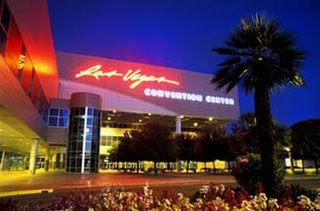
Can Vegas Sustain Another CES?


Trade shows, especially in the technology industry, often gravitate to the grand city of Las Vegas. Why? The location is always upbeat, the space accommodating, and the area fairly central to most. But anyone that's traveled to an event there over the past few years knows that the costs are also exponential, and only getting larger. If you go to Vegas for a show like CES, you're liable to pay upwards of $300/night for a hotel room that would normally run for half that. A good meal is tough to find for a reasonable price (although plenty of fantastic meals are to be had if you're willing to fork over the dough for them!) And drinks? You're lucky to find anything, and I mean anything with even just a drop of alcohol for less than $10. But with the economy in the state that it's currently in, will Vegas be able to keep up its perceived price gouging of trade show-goers?

The next massive show to arrive in Sin City is indeed CES this January. At this year's CEDIA EXPO, which took place in Denver, CO, many were rumbling that CES would be jumping ship to another city once its contract was up. The reason? Pricing was getting ridiculous in that great city known as Lost Wages. Some claimed that this wasn't entirely true: the CEA was just bluffing in an effort to get Vegas to wake up to the incredible loss the city would experience if events companies started moving their business elsewhere. Neither of these rumours have ever been substantiated, but we have seen evidence that Las Vegas definitely needs to, and might already be, waking up to the effects economic uncertainty can have.

Visit the official CES Website (http://www.cesweb.org/), for instance, and you'll see a ton of hotels highlighted in bright yellow, signifying that they're offering reduced rates for show attendees. The most dramatic is the Excalibur, where a room that was $219 has now been reduced to just $141.

Aside from the show, the downturn the city is suffering from is becoming quite apparent. According to the Las Vegas Meetings and Travel Website from the Conventions and Visitors Authority, the number of visitors during the month of September was down 10.1% when compared to September 2007. In August, visitors were down 4.3%. The number of attendees at conferences was down 10% in Sept. and a whopping 22.3% in August; while the number of conferences actually held during those months was down 17.9% and 7.2%, respectively when compared to the prior year. Airline passengers arriving to or leaving from Vegas was also down: 9.9% in August and 13.2% in September. On average, all of the aforementioned figures were down at least 4% throughout the entire year of 2008 when compared to '07.

Meanwhile, even the gamblers are pinching their pennies. A recent Reuters report indicates that Vegas gambling is down for the ninth month in a row, while the take for casinos has dropped US$58 million from one year ago to an astonishing US$1 billion! Company shares on the stock market are also plummeting: Las Vegas Sands Corp. dropped from US$122 to just US$6; MGM Mirage from US$93 to US$11; and Wynn Resorts Ltd. from US$139 to under US$44.

While you won't see relevant companies opting out of attending CES this year altogether, you will see a cut back in the number of employees going down to the show. This means fewer flights, fewer dollars acquired from hotel room bookings, fewer dollars spent gambling, and fewer food and drink sales. Booths at the show will likely remain as big and flashy as they always are, but it's very possible that companies will be scaling back on even booth space as they consider bookings for next year's show.

What does this mean? The city of Las Vegas should really be pro-active in addressing all of these concerns, for both visitors and potential business partners that are looking to hold their conventions, events, and parties there. CES isn't moving to another location just yet, and has never announced that it is looking to do so either. But everything could tumble like a deck of cards if Vegas doesn't start proving itself a worthy, and reasonably-priced, home for convention-holders and goers to spend their money.

[Photo: Las Vegas News Bureau (LVCVA)].

Bookmark and Share

Tuesday, October 28, 2008

Recession, or Minor Setback?

Aside from the pending election, the biggest buzz nowadays is about the existence (or perceived existence) of a "recession". But are things really that bad north of the border here in Canada? Many would beg to differ.

An interesting article in the National Post written by Jacqueline Thorpe and Paul Vieira quotes the governor of the Bank of Canada, Mark Carney, as stating that the "sky is not falling" in this country, adding that while we should prepare for "sluggish growth", we do not "have the imbalances in our economy that other economies have going into this time of difficulty."

This shouldn't be taken to mean that Canadians will skate through this time completely unaffected. Companies will need to scale back certain niceties, and make minor adjustments until the situation blows over (and let's face it: it will blow over eventually). But the important thing is to remain as close as possible to "business as usual". After all, when things get back to what many would call "normal", it'll be those who kept their head high through the tough times that benefit the most.

What's more, many are confident that the tech sector specifically is somewhat "recession-proof", if not at least recession-"resistant". TWICE Magazine claims that U.S. TV manufacturers are "cautiously optimistic" that sales will continue to be strong through the upcoming holiday season, despite what's going on in the economy.

The reason is obvious: if you cut costs by not eating out, going shopping, or heading out to see a movie, what do you do? Stay at home! You can take the kids out for dinner and a movie every Friday night, or invest in a home theatre system (and some Ben & Jerrys!) at home that can be enjoyed for years and years to come instead of just one night. As research firm Futuresource Consulting puts it, these items offer much better "value-for-money", along with "tangible benefits." On the TV end, the only cut-back Futuresource has observed is in size: it seems that rather than fork over the extra dough for 50"+-sized panels, customers appear to be, more often than before, opting for 32" and 42" sets instead.

The optimism doesn't just relate to the TV industry, though. It also goes for computer-related products, and even video games. Sure, it isn't healthy to stay seated on the couch every weekend just because you don't want to go out and spend money. But why not watch TV while on the treadmill? Or play some Nintendo Wii games with the family instead of heading out to Chuck E Cheese? Bottom line: there is a way that consumers can reduce frivolous spending that can also benefit the CE industry.

Nevertheless, retailers, manufacturers, and distributors are, and will continue to do what they have to do in order to be cautious and remain profitable. I've seen several e-mail notifications that advise of price increases due to the "falling Canadian currency", or that regretfully announce the cessation of certain incentive programs for the time being. C'est la vie, as they say. But the most important thing to consider is to keep your business strong by whatever means necessary. Otherwise, you'll be eating everyone else's dust once things pick up again.

Bookmark and Share

Thursday, June 5, 2008

Does Recession Mean Increased Interest in Technology?

I have said many times that, in a recession, consumer electronics is likely the one category that won't suffer as much as the others. Today, a study commissioned by Blockbuster reports the same. Why? When people don't have as much disposable income, they stay home. What do they do at home? Watch TV or movies, play videos game, and surf around on the 'net.

So while the restaurant, vacation, and other like recreational industries are suffering, consumer electronics are becoming more central to people's daily lives. Granted, while people are watching more TV at home (87% of survey respondents said they would be using their home theatre more often in the coming months) they aren't exactly spending more money: your cable/satellite bill doesn't go up if you watch more TV, unless you opt for pay channels. But this means that consumers might become more aware of new technologies as they place more focus on digital entertainment. They might learn about channels they don't have and look into subscribing (I'm saving hundreds of dollars by not eating out every Friday anymore, so what's another $5/mo. tacked onto my cable bill?)

As lagging consumers stare at the old clunker of a TV in the middle of the living room that they didn't spend so much time with before, they might even start thinking of upgrading. If you're watching it more now, that justifies the purchase, right?

Of course Blockbuster hopes that this increased interest in "staying home" will also amount to lots and lots of movie rentals. It probably will. And hopefully once the recession has passed, consumers will look to invest in a fancy new home theatre so that they can enjoy these movies, as well as regular TV programming, and even video games, in all their glory.

Bookmark and Share